Sea Turtles: What to Do If You Spot One
Protecting sea turtles along the coast
Guidelines to follow on the beaches of Cavallino-Treporti if you find a stranded sea turtle, an animal in distress or signs of a possible nest.
Sea turtles live in the waters of the Adriatic Sea and may sometimes be spotted close to the shore or found on the beach. Along the Cavallino-Treporti coastline, it is therefore important to know what to do when encountering a stranded animal, a turtle in distress or signs of possible nesting. The Veneto Region has established a coordinated network to manage reports, assist animals and protect possible Caretta caretta nests.
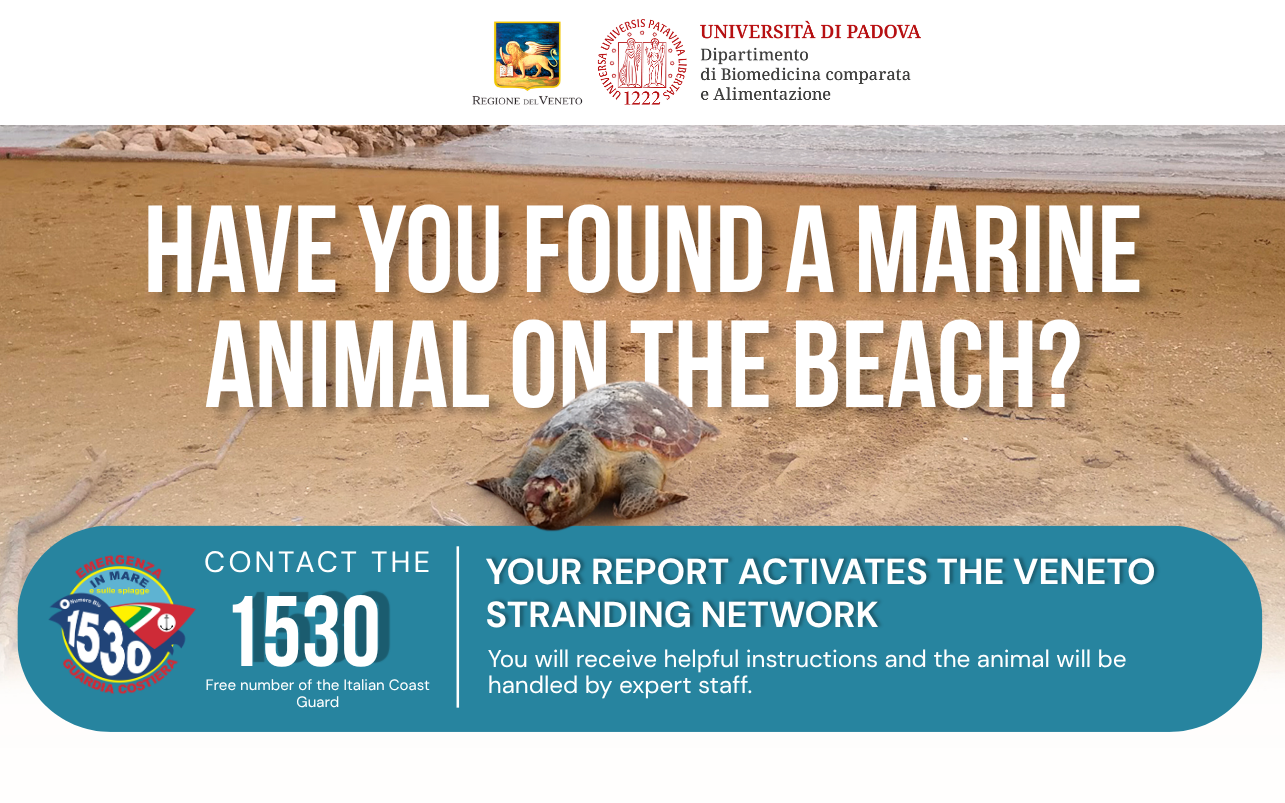
Have you found a turtle? Call 1530
The first thing to do is call the Italian Coast Guard’s free number 1530, available 24 hours a day. Your report will activate the Veneto Stranding Network and allow qualified personnel to intervene. Please provide the exact location, describe the animal’s condition and, without approaching it, take a photograph and record your position.
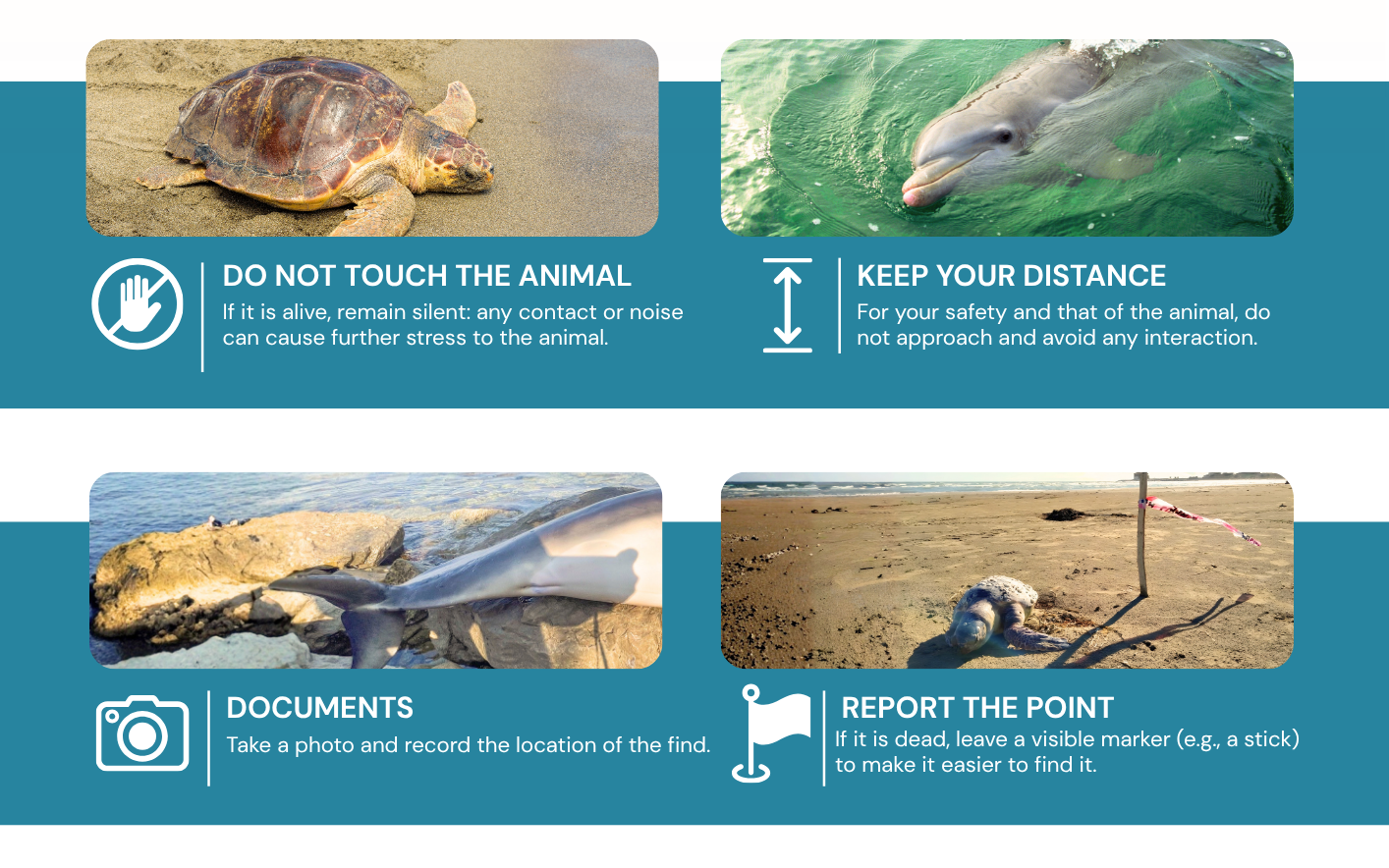
Do not touch the animal and keep your distance
A turtle found on the beach may be injured, disoriented or weakened. Do not touch, move or return it to the sea unless instructed to do so by an expert. Remain quiet, avoid noise and interaction, and keep children and pets away. If the animal is dead, you may place a clearly visible marker nearby, without moving the turtle, to help the operators locate the reported site.
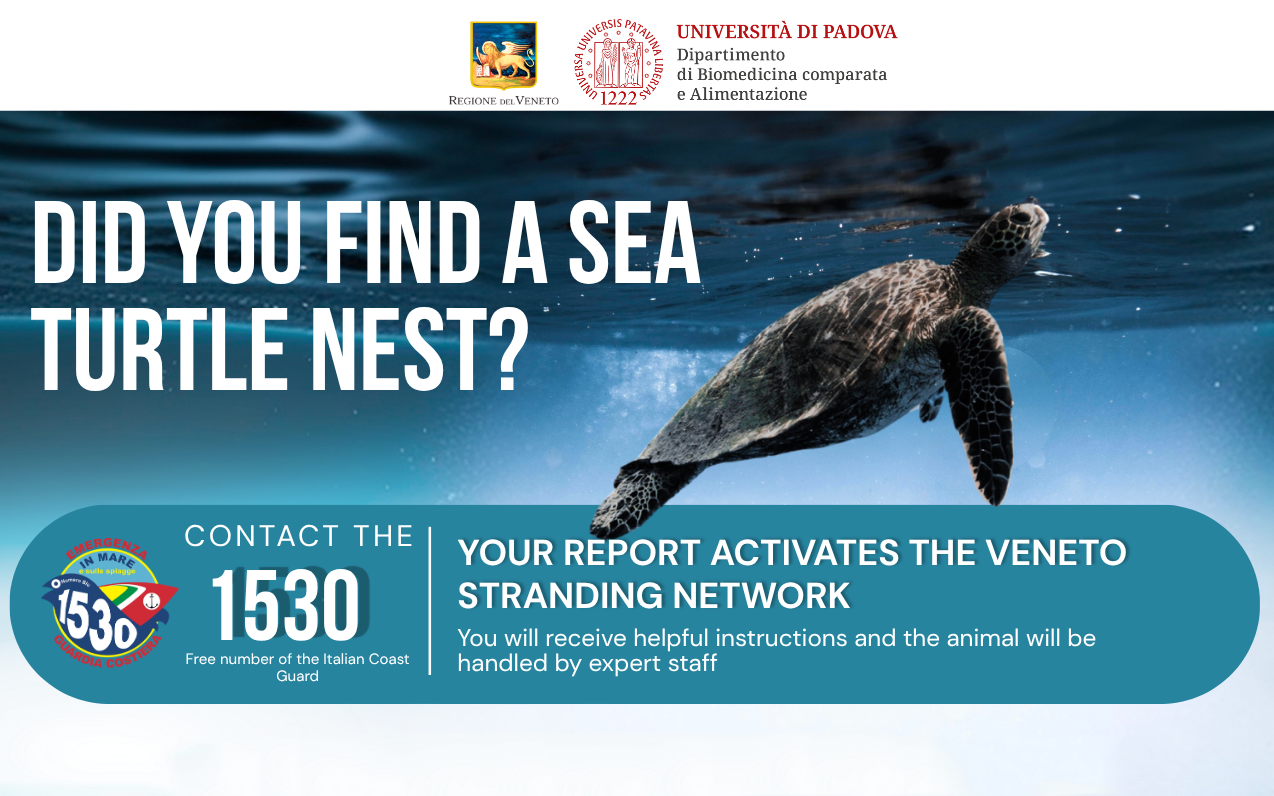
How to recognise a possible nest
Sea turtle nesting in the Mediterranean generally takes place between May and September, mainly at night or in the early hours of the morning. Possible signs include the presence of an adult turtle on the beach and tracks in the sand resembling those left by a small tracked vehicle, showing the turtle’s route from the sea and back again. A female may lay around one hundred eggs before covering the nest and returning to the water.
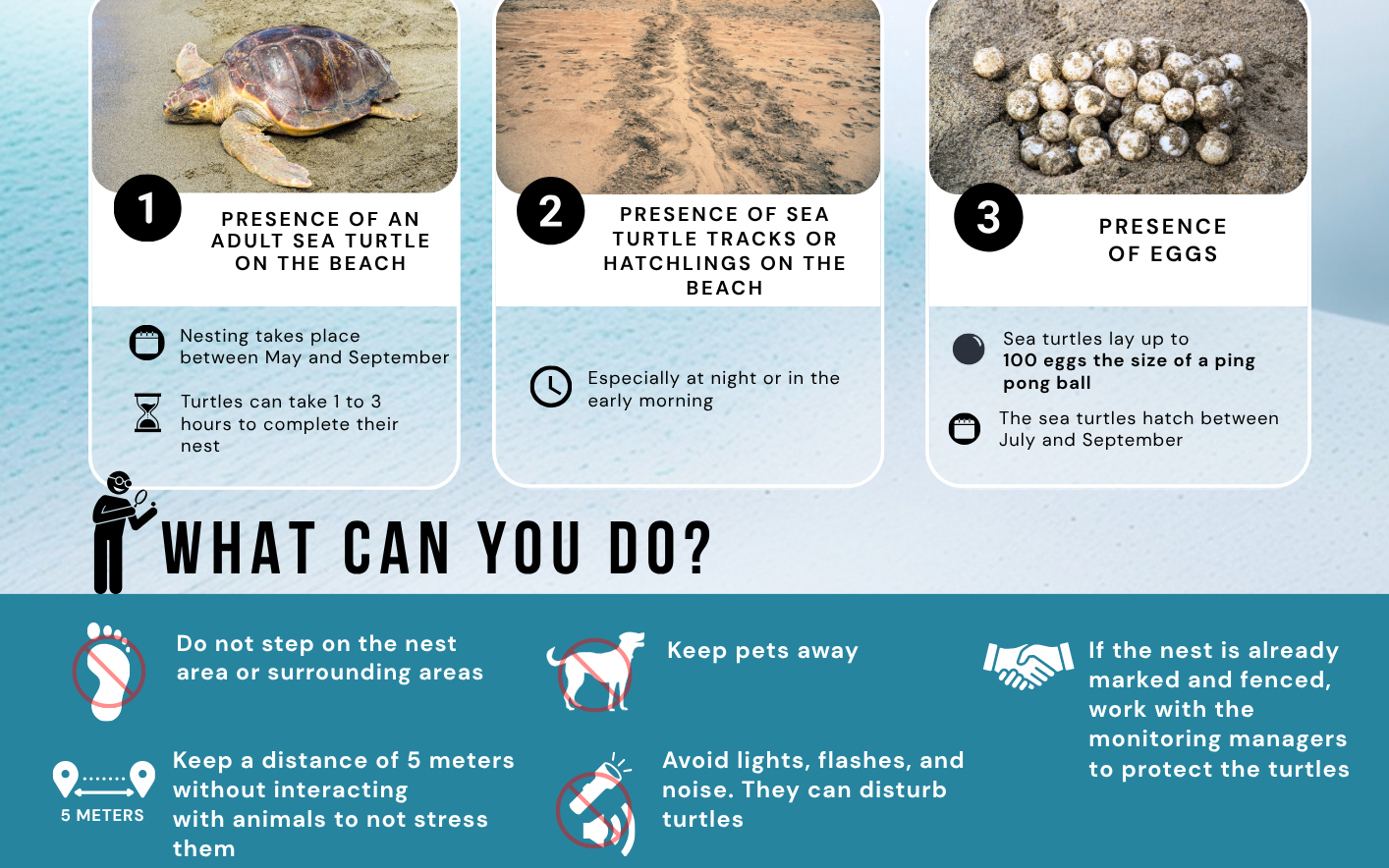
What to do near a nest or during hatching
If you notice unusual tracks or a possible nest, call 1530, do not walk on or alter the area, and remain at least five metres away. Lights, camera flashes, noise and pets may disturb the adult turtle or disorient the hatchlings. If the nest has already been fenced off and marked, follow the instructions provided by the monitoring staff and keep the route to the sea clear.
Downloadable information materials
Download the information leaflets produced by the Veneto Region with the scientific support of the University of Padua.
-
Certification
-
![Blue flag]()
-
![Child friendly beach]()
-
![Bike friendly municipality of Cavallino Treporti]()
-
![UNESCO]()
-
![EMAS]()


-
Partner
-
![Municipality of Cavallano Treporti]()
-
![Via dei Forti]()
-
![Veneto - Land of Venice]()
-
![Venice Sands]()


